99LL is an AI refinery lab turning open resources into parts agents trust.
We believe open digital resources are the next great supply chain for AI agents. They are open, copied everywhere, and almost entirely unchecked.
“Civilization advances by extending the number of important operations which we can perform without thinking about them.”
Alfred North Whitehead, An Introduction to Mathematics, 1911
Why refining
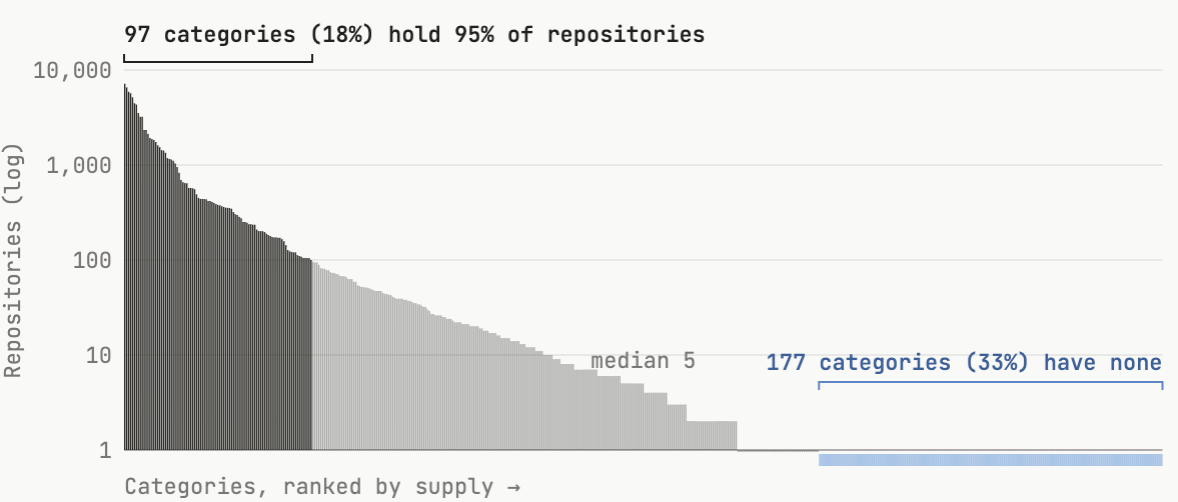
The resources agents reach for are shockingly hard to trust. Take software, the first raw material we measured: GitHub holds 395 million public repositories, and almost none show a checked licence, a security review, or any proof that they work.
Part of the problem is that stars measure popularity, not safety. One repository with 62,508 stars scored 3.2 out of 10 on the OpenSSF Scorecard. Of the 300 candidates we sampled, 97 had no usable licence, 62 had gone 90 days without an update, and 96 scored below 5. To use any resource safely, agents need parts that someone has read, scanned, repaired and run. It's in this gap where 99LL works: 44 of the 300 passed all three checks. Templates, designs, courses and documents are the next raw materials; we have not measured them yet.
Public repository count from GitHub Octoverse 2025. Sample 1 is software: 300 repositories read 16 October 2026.
Repair and retag
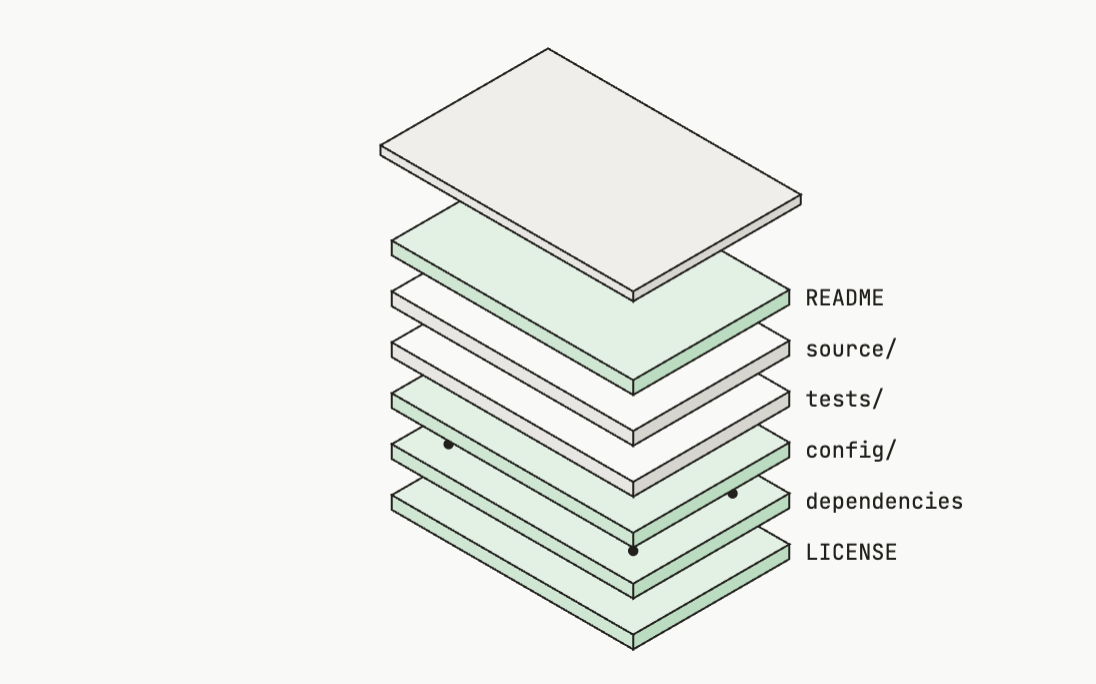
At the same time, a part that fails a check is usually one small repair away from being useful. A missing licence file, an unpinned dependency or a leaked token can each be fixed in minutes. This all leads to an interesting question: what if checking is the product? What if one method could repair, rate and re-check every part an agent installs?
This would directly address one of the biggest failure modes of reused parts: silent breakage. A part that worked last month can break when its upstream changes or a dependency drifts. Re-checking on a schedule catches this, exposing failures that a one-time review would miss. It also gives agents something they cannot get today: a measured rating.
- 01LICENSE file missing: added from the author's stated licence
- 02Hard-coded API token found: removed and rotated
- 03Unpinned dependency: pinned and scanned again
- 04Description too vague for an agent to choose it: rewritten
- 05No test task: one written, run with and without the part
- 06Metadata retagged: part number, licence grade and rating written into the manifest
Repairs listed are the kinds 99LL makes. The figure uses an example part, not one of the 300.
Our index
We're building a rated index of agent parts, alongside the checks and re-checks needed to keep it honest. Our rating compares each part only with others in its category, the way Morningstar rates a fund. We've measured the first 300 candidates, and 44 passed the licence, activity and security checks.
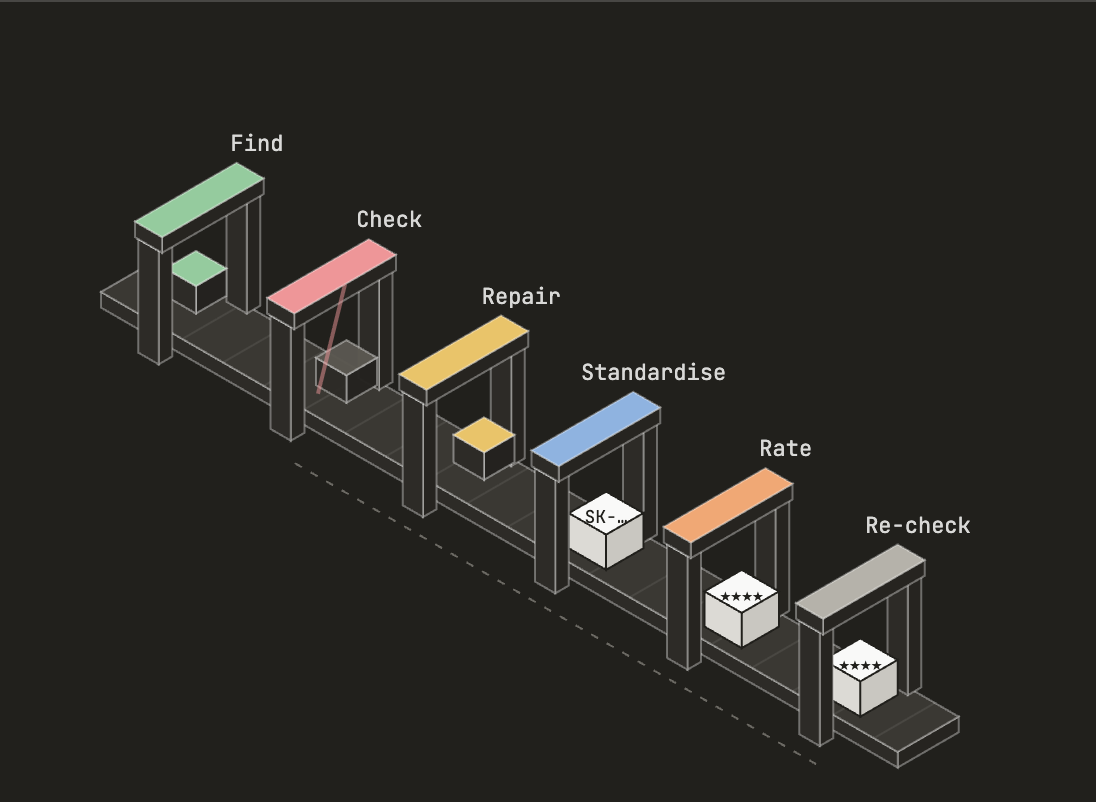
Upon release, agents will be able to query the index by category, filter by licence and rating, install it as a standard package, run it, and report whether it worked, and every report moves the rating. A trusted supply of parts that any agent can use, from Claude Code and Codex to Cursor and Gemini CLI.
- Find
- Check
- Repair
- Standardise
- Rate
- Re-check
Leverage
Our biggest asset is leverage: a part checked once is trusted by every agent that installs it, so nobody has to rebuild it again. The hours that went into rebuilding go into new problems, the 177 categories that no one has built for yet.
Questions about a part or the index? Write to us at [email protected].